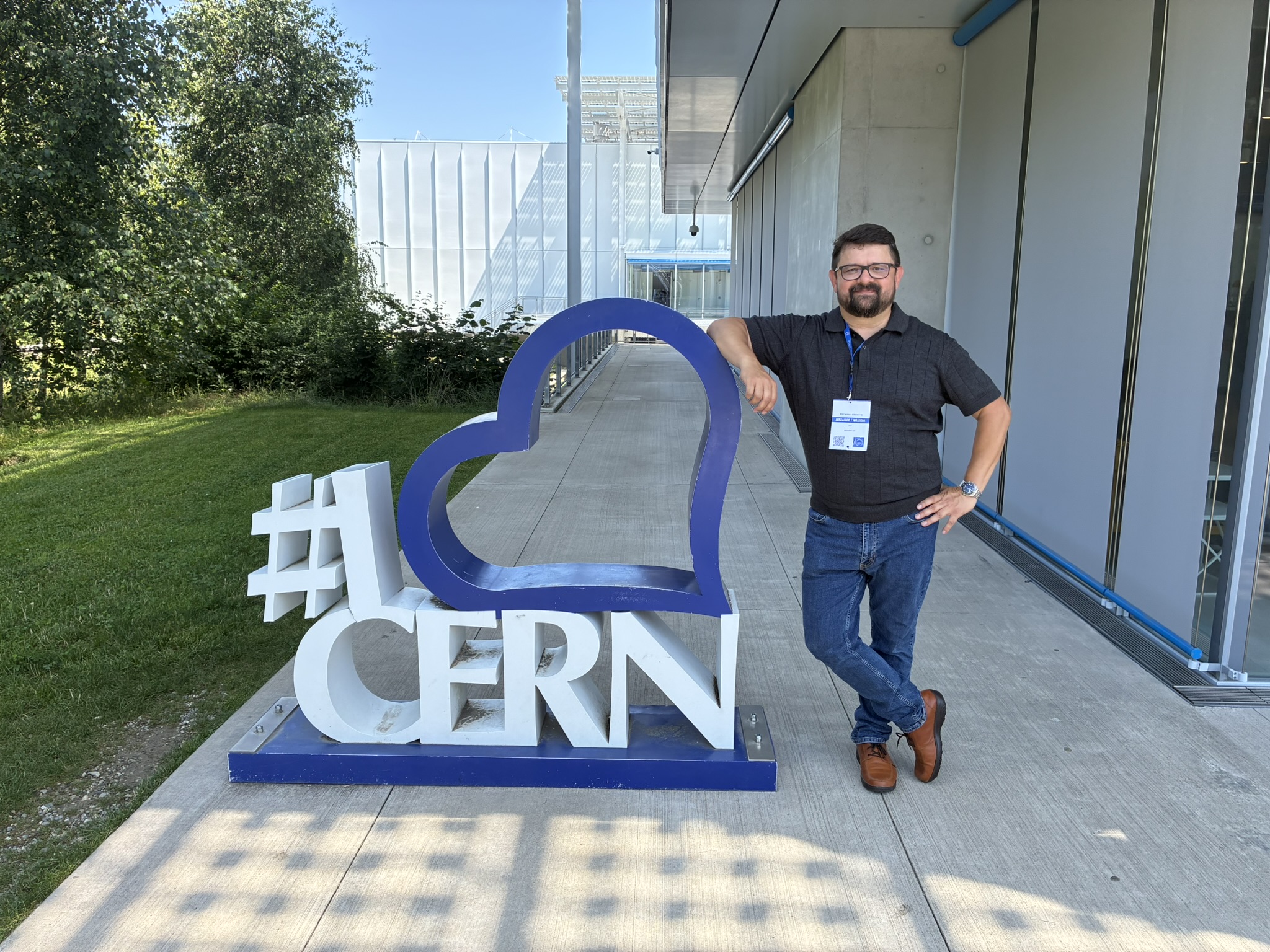
There are data centres – and then there is CERN.
LOAD recently had the opportunity to visit CERN in Geneva as part of a Swedish industry delegation organised by Big Science Sweden. The two-day programme brought Swedish companies together with CERN procurement specialists, technical experts and decision-makers to explore future opportunities for collaboration.
For LOAD, one of the highlights was naturally CERN's Data Centre. The scale of the infrastructure required to support one of the world's leading scientific organisations is impressive, and so are the storage requirements. Seeing CERN's enormous tape libraries first-hand was a reminder that, even in an era dominated by flash, cloud and AI, tape remains an extremely important technology when enormous quantities of data must be stored reliably and economically.
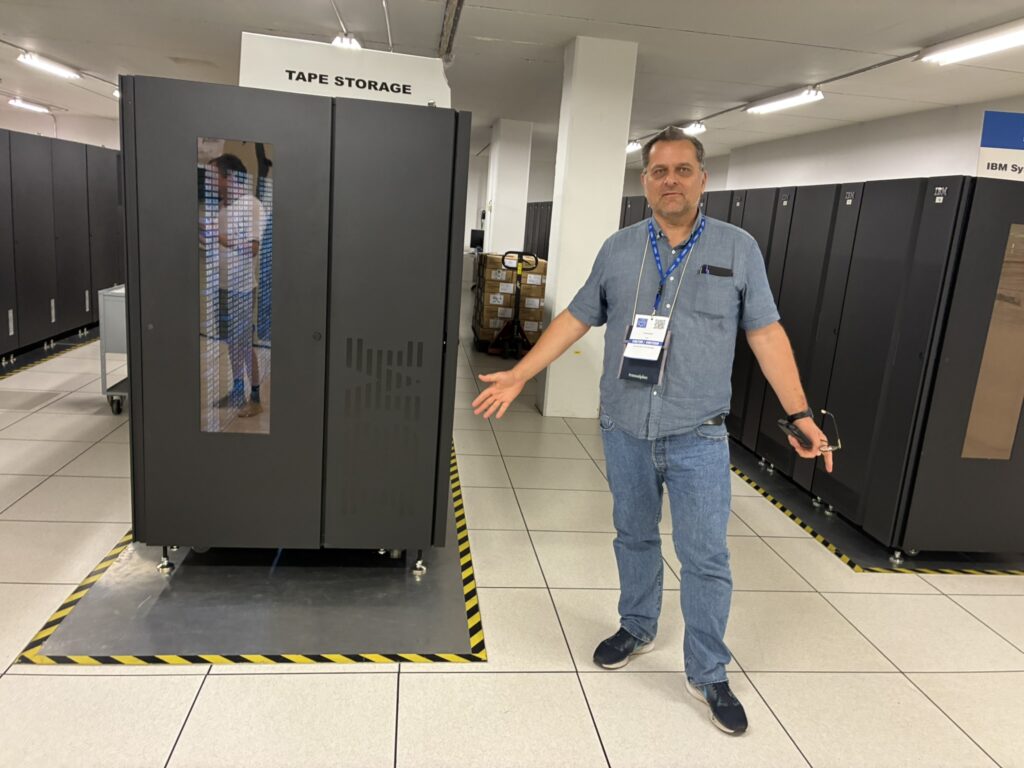
But perhaps more valuable than seeing the technology itself were the discussions surrounding it.
The programme was deliberately built around dialogue rather than presentations, giving participating companies the opportunity to meet CERN experts within their respective fields and discuss current challenges, technologies and potential areas for collaboration. Data management and infrastructure were among the subjects covered.
For LOAD, these conversations resulted in several interesting new contacts within CERN's data centre and storage organisation – relationships we hope can develop into future business opportunities.
From MAX IV to CERN
Big Science is actually not an entirely new world for LOAD.
Today, LOAD supplies infrastructure to MAX IV Laboratory in Lund, Sweden's synchrotron radiation facility and one of the world's most advanced research infrastructures.
That makes Big Science a particularly interesting niche for us. There are only so many major particle accelerators and large-scale scientific facilities in the world, but their requirements for compute, storage, data management, availability and long-term data retention are extraordinary.
And those are challenges LOAD understands.
And then there was the antimatter…
Our visit also took us to CERN's Antimatter Factory, where scientists produce antiprotons for research.
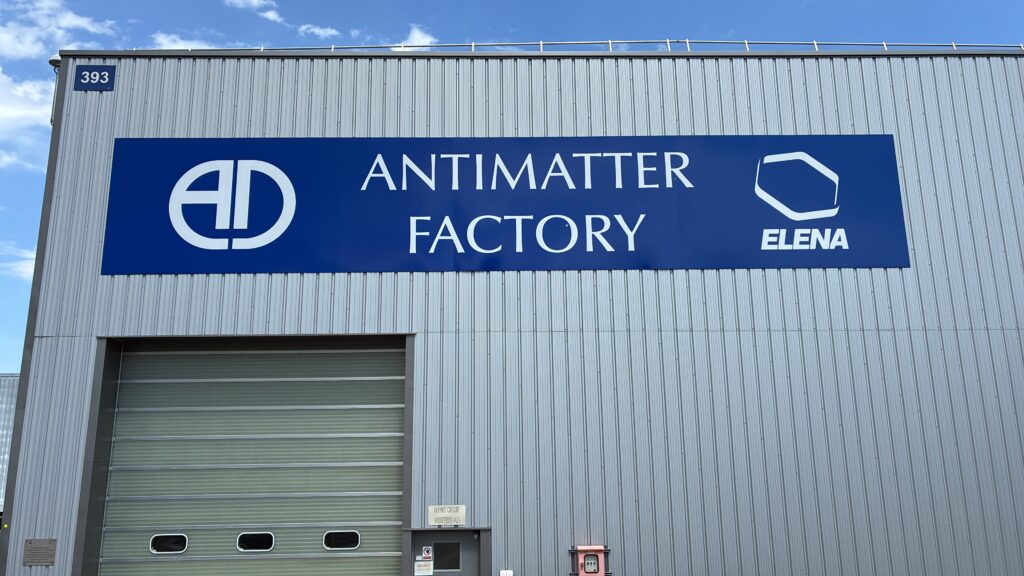
Antimatter is extraordinarily difficult to produce and store. CERN's Antimatter Factory delivers hundreds of millions of antiprotons per hour, yet the actual accumulated mass is almost unimaginably small. (CERN)
Even more remarkable: CERN can now put antimatter on a truck.
In March 2026, CERN successfully loaded a portable trap containing antiprotons onto a specially equipped truck and transported it across the CERN site – a world first and an important step towards eventually delivering antimatter to research laboratories elsewhere in Europe. (CERN)
So, technically, CERN is developing an antimatter delivery service.
Probably not coming to your doorstep anytime soon – but it certainly puts next-day delivery into perspective.
A fascinating visit, valuable new relationships, and hopefully the beginning of some very interesting opportunities for LOAD within the world of Big Science.